
Editorial content is one of the most powerful tools businesses have to build visibility, strengthen their brand and engage audiences. From blogs and thought leadership to social media posts, white papers and newsletters, organisations now rely on a steady stream of content to stay relevant and competitive.
But producing high-quality content consistently has always been difficult.
Traditional content production models depend heavily on internal teams or external agencies. Both can deliver excellent work, but they also come with limitations: editorial calendars fill up quickly, production cycles can be slow, and costs can rise significantly when businesses want to increase their output.
As a result, many organisations face a familiar challenge. They know they need to publish more content to compete effectively, but scaling their production without dramatically increasing costs or resources has historically been difficult.
This is where artificial intelligence is transforming the landscape.
AI emerges as a potential silver bullet
Generative AI allows businesses to produce content far more quickly than traditional methods. Draft articles, social posts, campaign ideas and marketing copy can be generated in minutes rather than days. This dramatically reduces the time it takes to move from idea to publish-ready content.
The cost implications are equally significant. By automating large parts of the writing and production process, AI allows organisations to create far greater volumes of content at a fraction of the cost typically associated with agency support or expanding in-house teams.
For many businesses, this opens the door to a much more ambitious content strategy.
Instead of producing a handful of articles each month, companies can publish consistently across multiple channels. They can build stronger thought leadership, improve their search visibility and raise their brand profile in the same way that larger competitors do – without requiring huge investment in editorial resources. In short, AI makes content scale achievable.
But I’m not a prompt expert and I don’t trust AI?
Many businesses still have understandable concerns when it comes to using AI for content creation.
This is a common and entirely reasonable concern. Most professionals are not trained in prompt engineering, and many organisations worry about issues such as inaccurate information, off-brand messaging or the risks of publishing unverified AI-generated content.
That’s exactly the challenge AI Refine was designed to solve.
Rather than expecting users to master complex prompts, the platform includes a built-in intelligent prompt engine that guides you effortlessly through the content creation process. This removes the technical barrier to using AI and ensures that the content generated is aligned with your specific objectives from the start.
Crucially, the platform is also tailored to your organisation. Your brand guidelines, tone of voice and compliance rules are built directly into the system, ensuring that every piece of content reflects your brand identity and messaging consistently.
This means the AI doesn’t produce generic content. Instead, it generates material that is already aligned with your organisation’s voice, positioning and standards.
A human answer to a tech shortcoming
To address the other major concern around AI – accuracy and trust – AI Refine goes one step further.
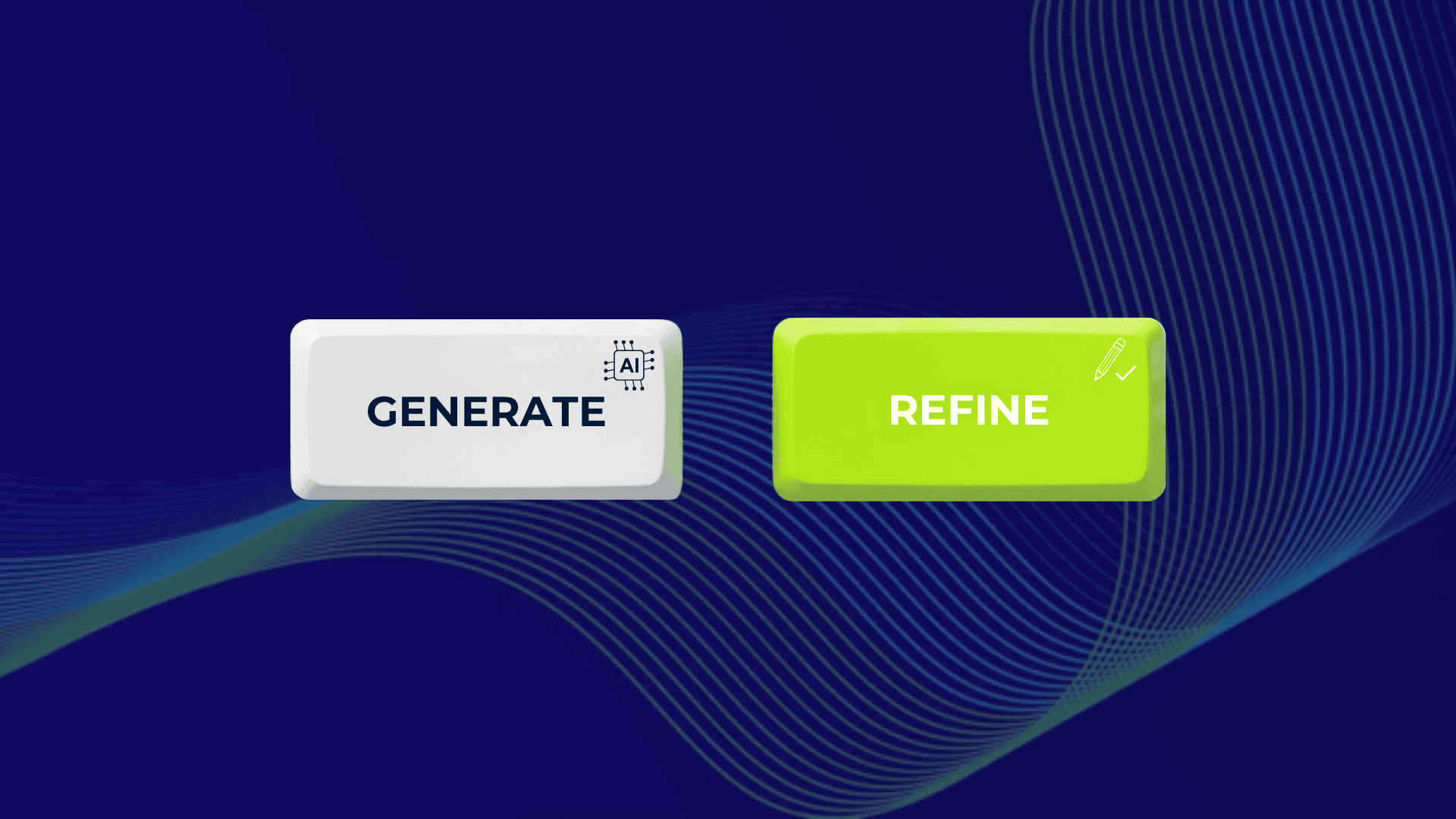
Every piece of content generated by the platform is reviewed by a team of specialist human editors, who carry out fact checking, accuracy checks and compliance reviews before the content is finalised. By combining AI with expert editorial oversight, the platform ensures that businesses can produce content that is not only fast and scalable, but also credible and trustworthy.
The result is a new model for content creation: one that combines the speed and scale of AI with the judgement and rigour of human editors.
For businesses, it means they can produce high-quality, on-brand, accurate content in a fraction of the time and cost traditionally required – while maintaining the trust and credibility that strong editorial demands.
In a world where content is essential for visibility and influence, that combination of scale, efficiency and quality can make all the difference.
Discover how organisations are combining AI generation with specialist editor review.